A rare earth concentrate deal that took months to negotiate can be undone in an afternoon by a torn bag liner, a misdeclared moisture figure or a missing certificate at a customs post. Physical logistics is where mineral trading's paperwork meets the real world - and where experienced counterparties quietly separate themselves from improvisers.
This is the complete picture of how concentrate actually moves from a Southeast Asian origin to a buyer's gate, from packaging choices to the document set that keeps containers flowing.
Packaging: The First Engineering Decision
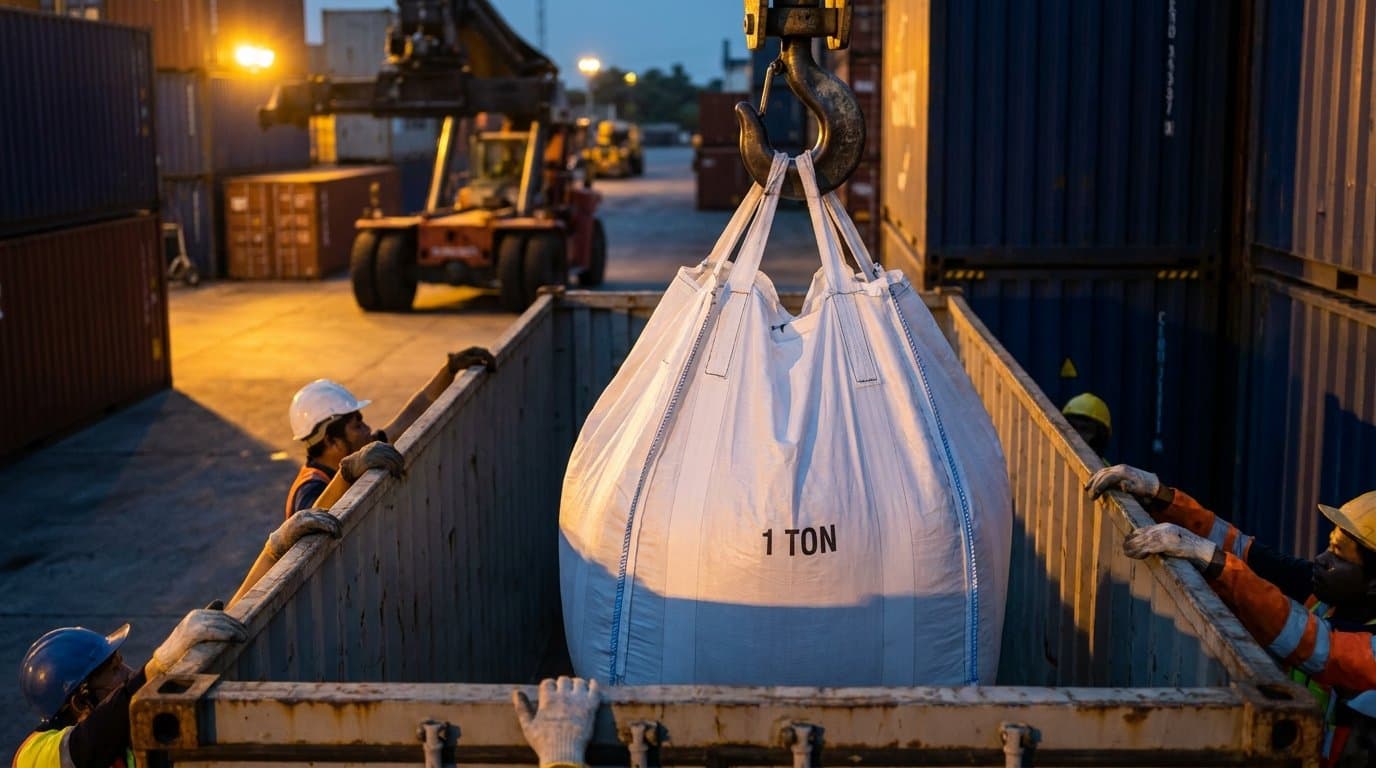
1 MT jumbo bags (FIBCs) are the industry standard for concentrates:
- Woven polypropylene, laminated, with inner PE liners - concentrates are hygroscopic, and moisture gained at sea is money lost at settlement (you pay for dry tons; see how testing works)
- UN-certified bag types where cargo classification requires it
- Clear labeling: lot number, gross/net weight, product, origin - matching the packing list exactly
- Typically 20–25 bags per 20 ft container depending on density and road weight limits
Steel or HDPE drums (200–250 kg) serve three cases: high-value parcels (premium tungsten grades, samples), materials needing extra containment, and certain regulated cargoes where drum-based packages simplify radiological transport compliance.
25 kg bags on shrink-wrapped pallets are standard for graphite, whose buyers often feed bag-scale batch processes.
Bulk (unbagged) container loading with liners exists for large base-metal flows but is rare for rare earths, where lot integrity and sampling traceability argue for bags.
Container Loading: Where Disputes Are Prevented
A professional loading operation produces evidence, not just a stuffed box:
- Container inspection - clean, dry, structurally sound, doors sealing properly; rejected units documented
- Weighbridge certification - tare and gross weights per container (also satisfying SOLAS VGM requirements)
- Bag tally - every bag counted and cross-checked against the packing list
- Photo documentation - empty container, lining, progressive loading, final stow, closed doors, applied seal
- Sealing - high-security bolt seals, numbers recorded on the B/L and packing list
- Surveyor witnessing - for first trades and L/C shipments, an independent surveyor (SGS, Bureau Veritas, Intertek) witnesses loading and sampling, and issues its own report
That photo-and-paper trail costs little and settles arguments before they start: when a buyer 15,000 km away opens doors eight weeks later, both sides know exactly what went in.
The Ocean Leg: Routes and Transit Times
From Thailand's gateways - Laem Chabang primarily, Bangkok Port as alternate - typical port-to-port transits run:
| Destination | Typical Transit |
|---|---|
| Rotterdam / Hamburg / Antwerp | 30–40 days |
| Mediterranean ports | 25–35 days |
| Japan / Korea | 7–12 days |
| China main ports | 5–10 days |
| US West Coast | 20–30 days |
| US East Coast / Gulf | 35–45 days |
| India (Nhava Sheva/Chennai) | 10–18 days |
Add 1–2 weeks ahead of sailing for booking, staging and loading, and clearance time at destination. End to end, Southeast Asia to a North European plant is realistically a 6–8 week pipeline - which is why buyers running continuous plants layer shipments and hold buffer stock.
Regulated cargoes change the math: Class 7 / NORM bookings (monazite - see the compliance guide) need carriers that accept the class and ports that handle it, sometimes adding weeks of routing work. Book these flows with suppliers who have done it before.
The Document Set: Nine Papers That Move the Cargo
A standard concentrate shipment travels on:
- Commercial invoice - contract-conformed, incoterm-stated
- Packing list - bag counts, weights, container and seal numbers
- Certificate of Analysis - the lot's certified chemistry (how to read one)
- Certificate of Origin - chamber-certified; preferential forms where trade agreements apply
- Bill of lading - the title document; on-board B/Ls anchor L/C payment
- MSDS/SDS - safety data, including radiological sections where relevant
- Weight/moisture certificates - surveyor-issued where contracts require
- Insurance certificate - for CIF/CIP shipments
- Cargo-specific extras - radiation survey reports and DG declarations (NORM), TML/moisture certificates under the IMSBC Code (sulfide concentrates), fumigation certificates where destination rules demand
For documentary-credit transactions, every field of every document must match the L/C's wording - banks reject on typos. This is a competence, not a formality; ask any prospective supplier how many discrepancy-free L/C presentations their team made last year.
What Shipping Actually Costs
Freight itself is often the smallest surprise. Budget lines buyers forget:
- Origin charges - inland haulage, terminal handling, customs brokerage, weighbridge, survey fees
- Packaging - quality FIBCs with liners are real money at scale; cheap bags are the most expensive option available
- Inspection - surveyor attendance at load (worth every dollar for early shipments)
- Regulated-cargo premiums - Class 7 handling, carrier surcharges, specialized documentation
- Destination - THC, clearance, duty (check preferential origin!), delivery, and demurrage if paperwork stalls
A supplier's "cheap" FOB price can quietly relocate several of these into your column - one more reason to compare quotes on identical incoterms.
Five Failure Modes We've Seen (So You Don't Have To)
- Moisture creep - unlined bags in a monsoon-season staging yard; buyer pays for water. Liners, covered storage, load-date moisture certs.
- Seal mismatch - B/L seal number differs from the physical seal; customs holds the box. Reconcile at loading, photograph everything.
- The COA-classification contradiction - thorium on the assay, "ordinary cargo" on the booking. Classify from the lot's own gamma spectrometry, always.
- L/C document rejection - a port name abbreviated differently than the credit's text. Draft documents against the L/C before printing.
- Orphaned samples - a quality dispute with no sealed umpire sample to resolve it. Three-way sealed splits at loading, chain of custody recorded.
Insurance, Claims and When Things Go Wrong Anyway
Even disciplined shipments meet misadventure - container drops, seawater ingress, vessel casualties, port strikes - and the difference between inconvenience and loss lives in preparation. Cover properly: Institute Cargo Clauses (A) ("all risks") for concentrate, valued at CIF plus an uplift (10% conventionally), with any NORM-relevant exclusions negotiated explicitly before binding. Document reflexively: the loading evidence this guide prescribes - photos, tallies, seal records, surveys - is precisely what substantiates claims; cargo interests who can show condition-at-loading recover, those who cannot, litigate. Act immediately on discovery: note damage on delivery receipts before signing clean, call surveyors while evidence is fresh, and notify insurers within policy windows. Understand general average: in vessel casualties, maritime law's ancient cost-sharing doctrine can hold your cargo hostage against security deposits - another line your insurer handles if, and only if, you are properly covered.
Claims practice also feeds back into prevention: insurers' loss statistics consistently trace concentrate claims to moisture (packaging failures), handling damage (bag quality) and documentation gaps (unclaimable losses) - the exact triad the front half of this guide exists to eliminate.
Frequently Asked Questions About Concentrate Shipping
How many tonnes fit in a 20 ft container? Road and rail weight limits, not cube, govern dense concentrate: 20–25 MT is the practical range across most corridors (some allow more with special permits). Jumbo-bag counts adjust accordingly - density, not volume, sizes the stow.
Are concentrates classified as dangerous goods? Mostly no - typical rare earth, tin and tungsten concentrates ship as general cargo with documented radiological screening. Exceptions matter: NORM material above thresholds (monazite) books as Class 7, and sulfide concentrates carry IMSBC liquefaction obligations in bulk. Classification flows from each lot's own data, never from category habit.
What is SOLAS VGM and who provides it? Verified Gross Mass - mandatory certified container weight before vessel loading, provided by the shipper via weighbridge (Method 1) or calculation (Method 2). Weighbridge documentation at loading satisfies it naturally; missing VGM strands containers at terminals.
Should small buyers consolidate or ship LCL? Concentrate rarely suits LCL (less-than-container) programs - contamination, handling and documentation risks outweigh freight savings. Trial quantities ship better as drummed parcels or small full-container lots; consolidation happens at origin across lots, under one shipper's control.
How do demurrage and detention bite, and how are they avoided? Free days at destination run out fast when documents lag or clearance stalls - then daily charges compound painfully. Prevention is documentary: complete, consistent paperwork dispatched ahead of arrival, brokers engaged early, and duty/licensing questions (preferential origin, NORM) resolved before the vessel sails, not after.
Key Takeaways on Concentrate Shipping
- Packaging is settlement protection: lined, laminated jumbo bags in sealed containers guard the dry-weight basis you are paid on - cheap bags are the costliest option available.
- Loading evidence prevents disputes: weighbridge certificates, tallies, photo documentation and surveyor witnessing settle arguments before they exist, for a fraction of one shipment's value.
- The nine-document set moves the cargo: invoice through B/L plus cargo-specific extras - with L/C transactions demanding field-perfect consistency banks will actually pay against.
- Transit is a 6–8 week pipeline Southeast Asia to Europe, all-in - buffer stock and layered shipments are how continuous plants stay continuous.
- Classification flows from data: each lot's own radiological screening and moisture testing determines its shipping category - habit-based classification is how cargoes strand.
- Five failure modes recur: moisture creep, seal mismatches, COA-classification contradictions, L/C typos and orphaned samples - every one preventable by the disciplines above.
- Insurance completes the system: Clauses (A) cover, prompt claims practice and general-average awareness - because even disciplined shipments meet weather.
Logistics as a Product
At CriticalOre we treat the shipping file as part of the product: lined bags and sealed containers, weighbridge and photo documentation as standard, surveyor witnessing on request, NORM-capable routing, and an L/C documentation team that drafts against the credit before anything prints. The full network - ports, routes, incoterms - is on our logistics page.
Moving concentrate soon? Request a quote with your destination, and we'll return freight-inclusive options with realistic transit times - not brochure numbers.